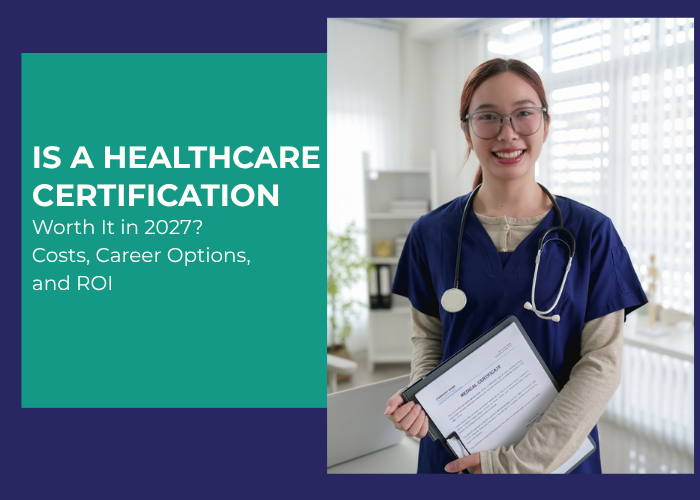
Starting a healthcare career does not always mean spending four years in college. For many people, a short training program can provide a faster way to build job-ready skills. But is the investment really worth it?
If you are asking whether healthcare certifications worth it in 2027, the answer depends on the career you choose, the training cost, and what you hope to earn or achieve after completing the program.
What Is a Healthcare Certification?
A healthcare certification shows that you have completed training and developed skills for a specific healthcare role. Depending on the career, certification may involve completing a training program, passing an exam, or meeting other requirements.
Common options include Certified Nursing Assistant, Medical Assistant, Pharmacy Technician, Phlebotomy Technician, and Patient Care Technician training. Medical billing and coding is another option for people who prefer less direct patient care.
The key is to choose a program that matches the type of work you actually want. After all, a certificate is only useful if it prepares you for a role you want to pursue.
How Much Does Healthcare Certification Cost?
The healthcare certification cost can vary quite a bit. Program length, course materials, hands-on training, testing fees, and other requirements can all affect the total price.
For example, a short program may cost less than a longer training course. However, the lowest price is not always the best deal. A program with hands-on practice, career support, and clear training goals may provide more value.
Before enrolling, look at the full cost. Ask about tuition, books, supplies, exam fees, uniforms, and any other charges. That way, there are fewer surprises later.
What Career Options Can You Explore?
One major benefit of healthcare certification is the range of entry-level career paths available. Your choice can depend on whether you enjoy direct patient care, clinical tasks, or office work.
Certified Nursing Assistant
CNAs provide basic patient care and support. They may help patients with daily activities, movement, personal care, and other needs under the direction of nursing staff.
Medical Assistant
Medical assistants often work in clinics and doctor’s offices. Their duties may include taking vital signs, preparing exam rooms, updating records, scheduling appointments, and helping with basic clinical tasks.
Pharmacy Technician
Pharmacy technicians support pharmacists with tasks such as preparing medications, managing inventory, processing orders, and assisting customers, depending on the workplace and state requirements.
Phlebotomy Technician
Phlebotomy technicians collect blood samples for testing. This career can suit people who are comfortable working directly with patients and want a focused healthcare role.
Patient Care Technician
Patient Care Technicians provide hands-on support and may assist with vital signs, patient mobility, daily care, and other basic tasks. Their duties vary by workplace.
How Do You Measure Healthcare Certification ROI?
Your healthcare certification ROI is not just about salary. It is about what you put into training compared with the value you get from it.
Start by looking at the total training cost. Then consider how long the program takes, what jobs it prepares you for, and what entry-level pay looks like in your area. You should also think about transportation, study time, exam fees, and any income you may give up while training.
Career growth matters, too. A certification may help you enter healthcare, gain experience, and later qualify for additional training or more advanced roles.
The U.S. Bureau of Labor Statistics projects healthcare and social assistance to be the fastest-growing major sector from 2024 to 2034, with an 8.4% projected growth rate. This does not guarantee a job for every graduate, but it shows that healthcare remains a major area of employment growth.
Is Certification Worth the Investment in 2027?
For many students, certification can be a practical way to enter healthcare without committing to a four-year degree. However, it is important to keep your personal goals in mind.
Consider the time required, total healthcare certification cost, career options, local job demand, and future growth. Also, check whether the role requires state approval, registration, an exam, or another credential.
In short, do your homework before signing up. A little research can help you avoid paying for training that does not match your career plans.
Choose Training That Fits Your Career Goals
The value of a healthcare program starts with choosing the right career. Think about the work you enjoy, the setting you prefer, and how quickly you want to enter the field.
At Integrity Health & Education, students can explore healthcare training options designed to build useful skills for different career paths.
Take the Next Step With the Right Program
Wondering whether healthcare certifications worth it in 2027 for your goals? Compare program length, costs, training, and career options before making your choice.
Explore healthcare training opportunities with Integrity Health & Education and find a program that fits your plans.
Frequently Asked Questions
1. Is getting a healthcare certification worth it in 2027?
It can be worth it for people who want focused training for an entry-level healthcare career. The value depends on the program, cost, career goals, and job opportunities.
2. How much does a healthcare certification cost?
The healthcare certification cost varies by program. Tuition, books, supplies, hands-on training, exams, and other requirements can affect the total price.
3. Which healthcare certifications can lead to entry-level jobs?
Options may include Certified Nursing Assistant, Medical Assistant, Pharmacy Technician, Phlebotomy Technician, and Patient Care Technician training.
4. How can I calculate the ROI of a healthcare certification?
Compare your total training costs with expected entry-level earnings and career opportunities. Also consider training time, exam fees, and potential future career growth.
5. Does a healthcare certification guarantee a job?
No. Completing a certification does not guarantee employment. Job opportunities can depend on your qualifications, location, experience, employer requirements, and the healthcare role you choose.

We are a trusted provider of accelerated healthcare and vocational training programs in Texas. Through expert-led courses in healthcare, skilled trades, and certification preparation, Integrity Health & Education equips students with practical skills, flexible learning options, and career-ready knowledge. Our blog delivers industry insights, career guidance, and educational resources to help learners succeed in today’s high-demand workforce.